


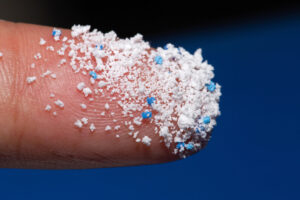
Earlier this year, a new study stirred up a whole lot of interest in the health world. Researchers examining human tissues after death found something no one really expected to see: relatively large concentrations of microplastics lodged in the brain.
How much? Media reports routinely described it as totaling up to 7 grams of “tiny plastic shards,” or about “the same weight as a plastic spoon.” What’s more, microplastics were found in every region of the brain and in quantities that increased over time.
The majority of MNPs [micro- and nano-plastics] found in tissues consist of PE [polyethylene] and appear to be nanoplastic shards or flakes. MNP concentrations in normal decedent brain samples were 7–30 times greater than the concentrations seen in livers or kidneys, and brain samples from dementia cases exhibited even greater MNP presence.
While there’s not enough evidence yet to say that bioaccumulation of microplastics actually causes cognitive issues, there’s certainly enough to give one pause – especially when it comes to plastics used in some dental materials. Your teeth are mere inches from your brain, after all.
What We Know – & What We’re Learning – About Microplastics & Health
 Scientists have been trying for a while now to understand how these particles behave in the body. Do they move? Stay put? Break down? Trigger reactions? Two recent scientific reviews help frame what we know so far.
A 2023 review in Environment & Health took a broad view of microplastics, from environmental exposure to biological effects. Through their analysis, the authors identified a number of emerging concerns:
oxidative stress, DNA damage, organ dysfunction, metabolic disorder, immune response, neurotoxicity, as well as reproductive and developmental toxicity. In addition, the epidemiological evidence suggests that a variety of chronic diseases may be related to microplastics exposure.
This was echoed by a comprehensive review published this past summer in Frontiers in Environmental Science.
Adverse health effects linked to microplastic exposure include metabolic disruptions, transport to internal organs, inflammatory responses, oxidative stress, cytotoxicity, and potential damage to the nervous and reproductive systems, along with possible carcinogenic outcomes.
It’s easy to think of microplastic as just another toxin, but the effects are more subtle than a classic poison and add up over time. Their presence can irritate tissue, stress the immune system, and fuel low-level inflammation.
And in our modern world, they’re everywhere: in the air we breathe, the water we drink, and the food we eat – not to mention countless products we use every day. But while we can’t completely avoid them, we can reduce our exposure. You’ll find plenty of good guidance on how to do so here.
And that brings us to dentistry.
Are Your Tooth-Colored Composite Fillings a Source of Microplastics?
Composite fillings – the metal-free kind that match the color of your teeth – are usually made from plastic-based resins. They’re a huge improvement over mercury amalgam both in terms of biocompatibility and aesthetics, but at the end of the day, they’re still plastics.

This isn’t something most patients are told. Even some dentists aren’t aware of it. You’d have to really dig into material science research or talk with many materials reps and specialists, as Dr. Railand has, to understand the issues at play.
Here at Sage Dental Wellness, we’ve put enormous effort into choosing materials that align with whole body wellness. That includes the composites we use for everyday restorations. Rather than relying on traditional plastic-based resins, Dr. Railand uses a BPA-free, non-microplastic composite that’s structured around glass ceramic chemistry. It doesn’t behave like a plastic or break down like a plastic. Consequently, it doesn’t – because it can’t – contribute to microplastic buildup in the body.
It takes a lot of extra time to identify products that meet our biocompatibility standards, but your health – not just your teeth but your whole body – is worth that effort.
Ultimately, when you look at the big picture, the real story isn’t just microplastics or dental materials. It’s about how all of the pieces of our world touch each other – and how our choices ripple through our bodies in ways that we don’t always see.
Once you understand this, you get to decide how you want to move through that world. You get to choose what supports your body. You get to choose what aligns with your values. You get to choose what brings you closer to the kind of health that feels good from the inside out.