

Last time, we looked at some of the risks of DIY dentistry – mostly the kinds that most people would recognize as pretty bad ideas: trying to fill a cavity or fix a broken tooth, for instance, or to extract a painfully diseased tooth.
But there’s another version we see far more often – one that usually comes from a thoughtful place. It’s rooted in the understandable desire to work with the body rather than against it. It’s a basic tenet of naturopathic, biological practice: Give the body what it needs to stimulate its own healing abilities.
It’s the idea of “healing” or even “curing” cavities naturally – mainly through nutrition, often rooted in the work of Dr. Weston A. Price, a dental researcher in the early 20th century. Price’s observations have been enormously influential in biological dentistry, showing how what we eat affects the growth and health of our jaws and teeth.
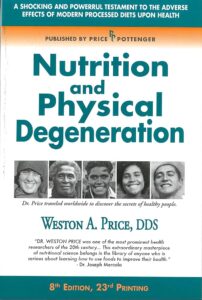 In Nutrition and Physical Degeneration, Price described how key nutritional changes could stop active decay and help the tooth protect itself against further damage. He was also very careful to note the limits of that process:
If it [the quality of the saliva] has been sufficiently improved [through the nutritional program], bacterial growth will not only be inhibited, but the leathery decayed dentine will become mineralized from the saliva by a process similar to petrification. Note that this mineralized dentine is not vital, nor does it increase in volume and fill the cavity.
That distinction matters.
“Arrested decay” looks nothing like a healthy, unblemished tooth. While the decay process has slowed or stopped, the enamel that once covered the tooth is still gone. The softer dentin it normally protects is exposed. This tissue hardens and appears darker than tooth enamel, even yellowish in color. Its texture is rougher, too.
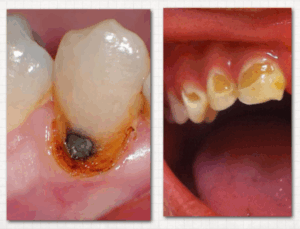 What remains is stabilized dentin, not newly formed enamel and not regenerated tooth structure. That’s because once your teeth finish developing, you no longer have the cells you need to create enamel. Nutrition can strengthen what remains. It can support the surrounding biology.
But it can’t rebuild enamel that’s been lost. And not knowing that can have serious consequences.
We’ve seen patients delay treatment because they’ve heard that teeth can repair themselves, only to have to get a full crown instead of a simple filling because the decay process didn’t stop completely. We’ve heard from parents who thought their child’s cavity was cured after a decayed tooth had stopped hurting, only to be told that the infection had actually made it all the way into the pulp.
The absence of pain didn’t signal recovery. It signaled the death of the tooth – and a referral to a pediatric endodontist (root canal specialist).
To be absolutely clear: These are cases that happened after decay had already broken through the enamel.
Before then, when decay is still just on the surface of the enamel, early intervention can often be gentle and effective. Treatments such as ozone therapy or micro air abrasion may be enough to remove the bacterial load without traditional drilling. Careful monitoring and supportive nutrition can help prevent decay from returning.
That window of opportunity closes, though, once decay pushes through the enamel and into the dentin.
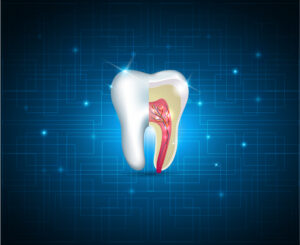 Dentin is porous and surrounds the living tissues of the tooth. Once bacteria reach this layer, they have a much easier path to the pulp chamber, where the tooth’s nerves and blood supply are. The risk of worsening infection increases.
This is where delayed care often backfires. What started as an effort to avoid drilling or expense can lead to abscess or even death of the tooth – outcomes that are more complex, more costly, and more disruptive than earlier, preventive care would have been.
Biological dentistry holds nutrition, lifestyle, and oral health as deeply interconnected. Food supports the body’s ability to maintain balance, manage inflammation, and respond to bacterial challenges. But teeth are physical structures with real limits.
Honoring the body means understanding both its strengths and its limitations. Preventive care recognizes both.
Nutrition matters. Prevention matters. And so does understanding when the body needs support beyond what it can do on its own.