



And just what, pray tell, is a cavitation? Also called jawbone osteonecrosis and fatty degenerative osteonecrosis of the jaw (FDOJ), it’s the word most commonly used for a condition that biological dentists know as Chronic Ischemic Medullary Disease of the Jawbone. You can see why the simpler term is used so commonly. Even the acronym of the condition – CIMDJ – is a mouthful! (And yes, that pun was absolutely intended.)
Cavitations are areas of dead or dying bone tissue that can persist for years, silently contributing to chronic inflammation and other systemic health issues. They can be caused by any number of things – from trauma to compromised bone health – but one of the most common triggers is tooth extraction.
Research by Drs. Hal Huggins and Thomas Levy found that these lesions developed at almost 90% of extraction sites – even more when wisdom teeth were involved. Another more recent survey found that roughly one-third of all cases of jawbone osteonecrosis (literally, “bone death”) resulted from oral surgery.
Those cases are largely preventable, as it’s not the extraction in and of itself that’s the problem. The trouble is how the extraction is done.
A Common Way Hidden Jaw Infections Develop
When a tooth is extracted, the socket should fill with blood, clot, and regenerate with new bone. For that to happen most effectively, all infected tissue around the tooth must be removed, too, and the supporting bone, cleaned.
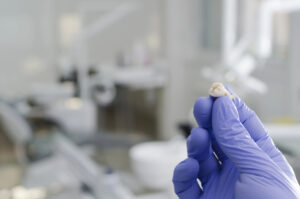 Standard surgery, though, tends to focus just on the tooth. The periodontal ligament (PDL) is often left behind – along with infected bone, bacterial biofilm, and even dead tissue. It’s easy enough to do. This extra step isn’t emphasized in dental school, nor are these contaminated tissues easy to see or access with conventional instruments.
So instead of healing through the surgical site, the body may heal over it instead. At a glance – and even on x-rays – the site may look healthy, but infection is brewing below. Without good blood flow to the area, immune cells can’t reach the area. Nor can oxygen. The bone becomes ischemic – starved of oxygen – creating the pockets of dead tissue that characterize CIMDJ, detectable on CBCT images of the mouth.
Ultimately, “cavitations” are sites of imperfect or incomplete healing. Over the years, they’ve been associated with autoimmune conditions, neurological symptoms, chronic fatigue, persistent pain, and more. That’s because oral health problems can affect more than just the mouth. Harmful microbes and the toxins they generate can and do travel throughout the body – including those involved in jawbone osteonecrosis.
One of the most important researchers doing work in this area today is Dr. Johann Lechner, head of the Clinic for Integrative Dentistry in Munich and author of 30+ scientific papers. Analyzing tissue samples from cavitation sites, Lechner has found inflammatory signaling molecules – cytokines like RANTES/CCL5 – at higher concentrations than you see in healthy bone. Those molecules can enter the circulation and contribute to body-wide inflammation. Lechner’s work has also identified tissue-degrading enzymes and bacterial toxins at cavitation sites.
What Makes an Extraction “Biological”?
As mentioned, though, cavitations are largely avoidable when we approach surgery through a biological lens. When we do, the prime question becomes this: What does this site need to heal completely and prevent future problems?
Our extraction protocol at Sage Dental Wellness covers the three keys to reducing the risk of jawbone osteonecrosis. These include 1) complete debridement (removing contaminated tissues), 2) thorough disinfection, and 3) strategic healing support. Three tools work together here to promote good healing: our Piezotome ultrasonic scalpel, platelet rich fibrin (PRF), and ozone therapy.
The Piezotome uses high-frequency ultrasonic vibrations sent through a super thin surgical tip. Dr. Railand uses it to go around the tooth, severing the periodontal ligament and gently loosening it from the surrounding bone. Unlike traditional forceps that stress the bone socket, the Piezotome preserves bone architecture – something you’ll need for future implant placement.
The technology’s selective cutting capability makes it especially valuable. The ultrasonic frequency affects only hard tissue – bone and calcified periodontal ligament – while leaving soft tissue unharmed. This means Dr. Railand can work safely even near nerves or the sinus membrane. Once the tooth is removed, she cleans the socket, removing any tissue that could get in the way of healing. The goal is complete debridement, leaving only healthy bone ready to regenerate.
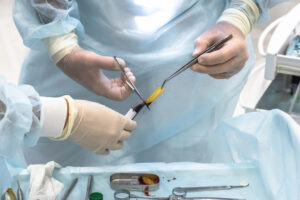 Then there’s platelet rich fibrin, which is made by spinning a small sample of your blood in a special centrifuge. This separates the blood into layers, one of which contains a massive concentration of platelets, growth factors, white blood cells, and stem cells – all the components needed for complete tissue regeneration. Just above it is a fibrous plug that acts as a biological bandage.
Once the socket and supporting bone have been thoroughly cleaned, PRF is placed at the extraction site where it speeds up healing, provides immune defense, and promotes the formation of new blood vessels. It also creates a kind of scaffold to support the growth of new bone and seals the socket from pathogens. Because it comes from your own blood, it’s 100% biocompatible.
Recent research using advanced 3D imaging has shown that the body does not always regenerate solid bone after tooth extraction—even with PRF. The extraction site can collapse and remain hollow in the center, creating the very cavitations that we aim to prevent. So Dr. Railand now incorporates bone graft material whenever possible, mixing it with LPRF (a liquid form of platelet-rich fibrin) before placing it in the socket. Standard PRF is used near sensitive areas like nerves or the sinus membrane. A non-resorbable membrane is then placed over the site and remains for three to four weeks, protecting the healing tissue underneath. This approach helps ensure the socket fills with solid, healthy bone rather than collapsing into a hollow defect.
Ozone also adds antimicrobial protection while also delivering more oxygen to the extraction site. Medical grade ozone is a powerful oxidizing agent that can destroy bacteria, viruses, and fungi without harming human tissue. Administered in gas form, as well as through water, it provides complete disinfection of every microscopic crevice in the socket and supporting bone. Used this way, ozone is as safe as it is effective and has no significant side effects.
What If I’ve Already Had Extractions Done?
For patients who are concerned about potential jawbone osteonecrosis due to previous oral surgeries, we offer comprehensive evaluation using 3D imaging that can detect bone abnormalities not visible on standard x-rays.
If present, cavitations can be addressed through a similar biological protocol.
But when extractions are done right the first time, cavitations generally don’t form. The jawbone heals as it should. That’s why we’ve invested in the training and technology to ensure that we always honor the biology of healing for every patient who trusts us with their dental care.