

When your dental office is a biological one, even a routine cleaning is anything but routine. It’s as individualized as every other treatment. A biological dental hygienist looks beyond removing surface buildup to understand what’s actually happening in the mouth and body to determine what’s needed to support your overall health.
 That’s the level of care our own hygienist, Madeline, has always brought to her work. And recently, she took it one step further, completing advanced training through the International Academy of Oral Medicine & Toxicology (IAOMT). She is now Accredited as a Biological Dental Hygienist.
We’re proud of her for her accomplishment – and we think it’s something our patients will appreciate, too.
Biological dentists like to say that “we treat people, not conditions.” We don’t assume that every case is the same.
That’s why we provide a thorough periodontal evaluation, diving into your medical history, medications, and risk factors with a depth and breadth that goes beyond conventional assessments. This includes evaluating your airway, sleep quality, bite analysis, stress, diet and lifestyle factors that can affect the bone that supports your teeth.
In addition we also offer targeted lab testing analysis. A saliva test shows us the levels of specific pathogens in your mouth, including bacteria, viruses and fungi. This matters because different microbes behave differently. Some are more aggressive, some are more persistent and the specific mix matters, too.
The clearer the picture we have of the overall health of your oral microbiome and environment, the more targeted and precise we can be during your hygiene visits.
Many patients who have not had a recent hygiene visit may find that they have gingivitis, which is inflammation of the gums. If caught early, this is reversible and treatment begins with removing plaque and tartar at the gumline – often with an ultrasonic unit using ozonated water for the most thorough cleaning possible.
In fact, ozone is an essential part of our approach. Every treatment room in our office is equipped with ozonated water, after all, so it’s built into your care from the start. In cases of more advanced disease, where bone loss is present, we make the diagnosis of periodontal disease.
In this case we may recommend laser treatment with our highly advanced Fotona Lightwalker. This state-of-the-art laser has two complementary wavelengths . One wavelength is used to remove diseased tissues, biofilm, plaque and tartar deep below the gum line where traditional dental hygiene instruments can not reach. The second stimulates bone growth and reattachment, along with the body’s own healing response.
Studies on this type of protocol have consistently shown better periodontal outcomes, including reduced inflammation and better healing. There’s even emerging evidence that reflects something that we’ve seen in our own patients: This type of dual-wavelength laser treatment may support the growth of new bone that supports your teeth.
That type of natural regeneration simply isn’t possible with conventional periodontal care alone.
Another thing we can do to encourage regeneration is use platelet-rich fibrin (PRF). This involves spinning a small sample of your own blood in a special centrifuge to concentrate the healing factors in it. We then place this directly into deeper pockets to support tissue repair, giving your body an added boost in rebuilding what’s been lost.
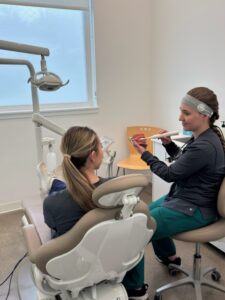 But Madeline’s role as your hygienist doesn’t end with your office visit. She’s also here to help you make sure that your home care will support the ongoing health of your teeth and gums. And that’s so much more than just brushing and flossing. She helps you understand what’s actually driving the health of your mouth and works with you to build a routine that fits your life. She supports you in making changes that actually stick.
Together as a team and as your oral health coach we can shape the oral environment, reduce risk factors, and support a healthy bacterial balance.
When your hygiene visits are thorough and individualized – and when that care is supported at home – you’re far more likely to avoid the kinds of problems that require more time, more intervention, and more cost down the line.