



Say the words “root canal” and watch people wince. Few dental procedures have quite as high of a fear factor — which is kind of funny because root canal treatment isn’t all that different from having a crown prepped or a deep filling placed.
In fact, from the perspective of biological dentistry, what is more dread-worthy is what can happen inside the tooth long after root canal treatment is done. To understand why, it helps to know that “root canal” is actually a reference to the anatomy involved.
Inside each tooth is a chamber full of nerves, blood vessels, and connective tissue. Collectively, these living tissues are called the pulp. The pulp descends into the tooth’s roots — through the root canals. There’s one or more per root reaching all the way down to where the root tip connects to the alveolar bone and, from there, to the rest of the body via the blood system.
If ever the pulp becomes infected or dies, a root canal may be recommended to “save” the tooth. The procedure involves removing the pulp and disinfecting the space it once occupied. The tooth is then filled and sealed so that although it’s no longer alive, it can still function.
That’s the idea. Those canals, though, are seldom as neat and clean as they appear in the average tooth diagram. They may curve, split, branch into accessory canals, and narrow into spaces too fine for any instrument to reach.
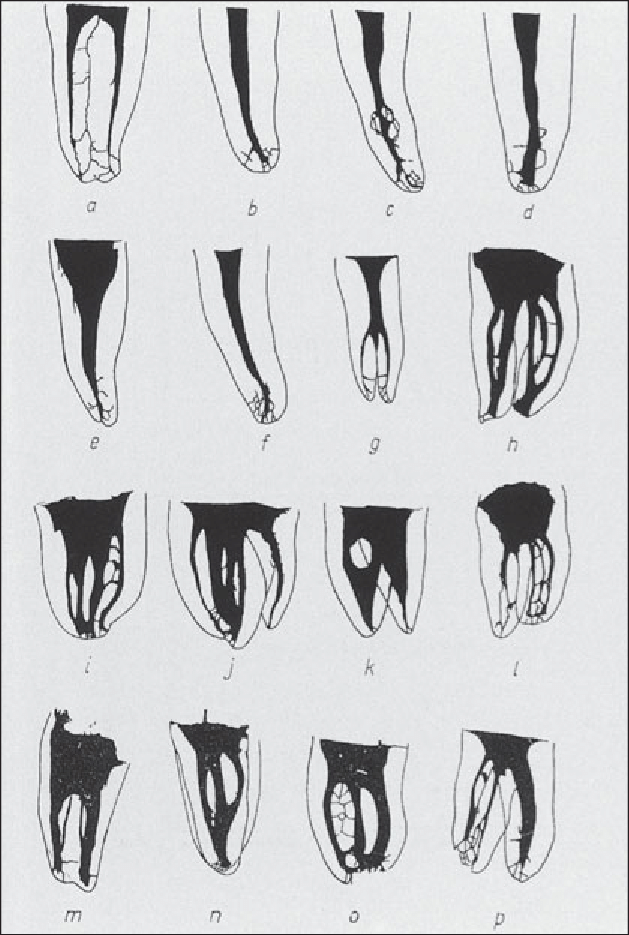
There are other microscopic structures to contend with, too: dentinal tubules. These tiny channels form a dense network throughout the tooth and also remain largely untouched during treatment.
Because of these areas that can’t be reached with standard disinfection techniques, it’s not uncommon for some bacteria to remain sealed within a root canaled tooth. According to research collected and reviewed by the International Academy of Biological Dentistry & Medicine (IABDM), residual bacteria can be found in more than 80% of all cases. One researcher they cite put it, total sterilization of the canals remains “a pipe dream.” A similar review by the International Academy of Oral Medicine & Toxicology (IAOMT) cites anatomical complexity as the main reason total disinfection remains out of reach.
Yet the tooth is still connected to the rest of the body at the root tip. That doesn’t go away once the pulp is removed. And because there’s no pulp to mount an immune response, there’s nothing to contain any remaining bacteria or the waste products they generate.
In some cases, infection develops at or around the apex of a root canal-treated tooth — a condition called chronic apical periodontitis (CAP). Because there’s typically no pain involved and little may appear on a standard x-ray, it can go unnoticed for years. According to the IAOMT review mentioned above, CAP affects somewhere between 40 and 60% of root-canaled teeth. Fortunately, CBCT imaging can often reveal what conventional 2D imaging misses.
Meantime, there’s the matter of the bacterial activity in the tooth. The microbes are free to feed on any organic material that remains in the dentinal tubules, breaking down sulfur-containing proteins in the residual tissue. What goes in must come out, and what comes out is a class of compounds called volatile sulfur compounds, or VSCs — specifically, methyl mercaptan, hydrogen sulfide, and thioethers. One study of 354 systemically ill patients by Johann Lechner found that measurable VSC levels in root canal-treated teeth correlated with markers of immune system disruption. Abnormal response in the immune cells responsible for regulating inflammation is a particular concern.
Other studies have focused on the systemic conditions potentially linked with CAP. They include heart disease, diabetes, neuroinflammation, autoimmune disorders, and adverse pregnancy outcomes. A review published last fall in the Journal of Dentistry found significant associations between CAP and a range of cardiovascular conditions, including heart attack, stroke, and congestive heart failure. This doesn’t prove that CAP caused these problems, but the volume and consistency of research findings warrants attention and additional study.
That said, not every root-canaled tooth will go on to trigger systemic illness. Not every root canal patient will develop chronic apical periodontitis. But some will. And the research is clear enough that the risks deserve to be part of every conversation about treatment options.
For some patients, that conversation leads to a decision to remove the tooth entirely — whether that’s an existing root canal tooth or a tooth that would otherwise be recommended for root canal treatment because of severe decay, infection, or trauma. In either case, extraction eliminates the risks that such teeth can present.
Of course, removing a tooth creates a new question: What should take its place?
Something should. That’s because teeth support one another. When one is lost, adjacent teeth can start to shift into the empty space, changing the bite and sometimes creating new problems in the mouth. Missing teeth can also affect chewing, speech, appearance, and long-term jawbone health.
One traditional way of filling the space is a bridge, in which the teeth on either side support a false tooth. This isn’t ideal, though, as it requires cutting away healthy tissue from those two teeth. Our biological approach favors saving as much natural tooth structure as possible.
Removable partials are another option — and today’s units are a far cry from the bulky appliances many older people remember. Modern materials allow for lightweight, natural-looking restorations that can replace one or more teeth while preserving neighboring tooth structure.
Then there are implants, the closest thing you can get to a natural tooth. Traditionally made from titanium alloys, we use only zirconia implants — a long-lasting biocompatible option. Because they’re ceramic, they resist corrosion and work much like a natural tooth once integrated with the bone.
Ultimately, every treatment decision involves tradeoffs. Our goal isn’t to tell you what choice to make but to help you understand your options — and their potential benefits, risks, and long-term implications. An informed patient is always in the best position to make the decision that’s right for them.